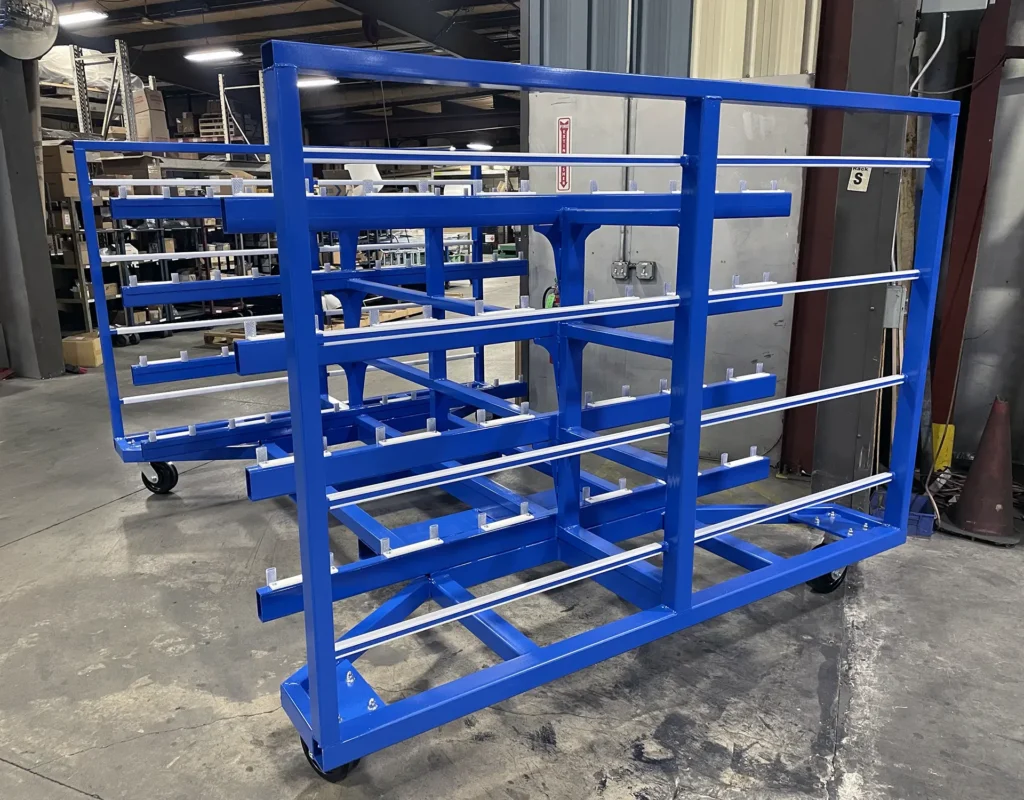
Moving long column assemblies through a data center construction project requires organized storage, protected contact points, and equipment built around the load. A standard flatbed cart may move materials, but a custom cart solution can address how those components are supported, separated, and accessed.
Plymouth Industries designed and fabricated a data center horizontal column job site cart for an electrical construction contractor. Built to accommodate 24 columns, this heavy-duty material handling cart combines horizontal storage, protective dunnage, forklift access, and industrial casters to support staging and movement before installation.
Custom Column Handling for Data Center Construction
Column assemblies require more than an open platform. Their length, weight, and attached components affect the placement of supports and the clearance needed during loading and unloading.
For this project, Plymouth Industries developed a tiered horizontal column cart with individual storage positions. The layout keeps columns separated and supported across multiple levels, giving crews an organized alternative to bulk stacking.
The design also accounts for electrical box clearance. By incorporating space around projecting components, the cart supports the assembly’s actual geometry rather than forcing the load to fit a general-purpose rack.
This approach helps contractors organize prefabricated components for the next stage of work while reducing unnecessary contact between parts.
Protective Dunnage at Key Contact Points
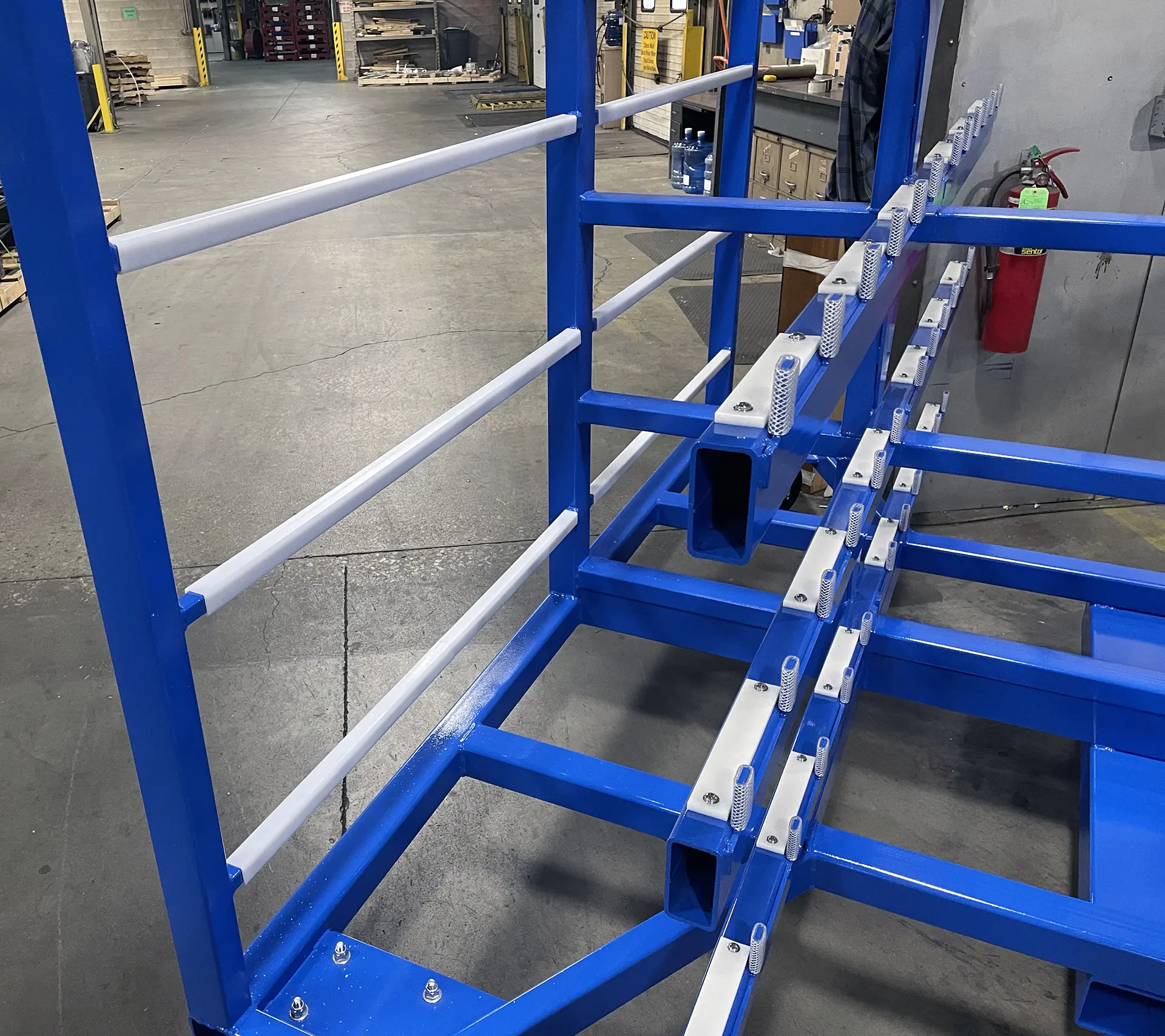
Protecting an assembly during handling starts with controlling where it touches the cart. This custom job site cart incorporates high-density polyethylene (HDPE) pads, padded side rails, and vertical bumpers at the column support locations.
These features serve specific purposes:
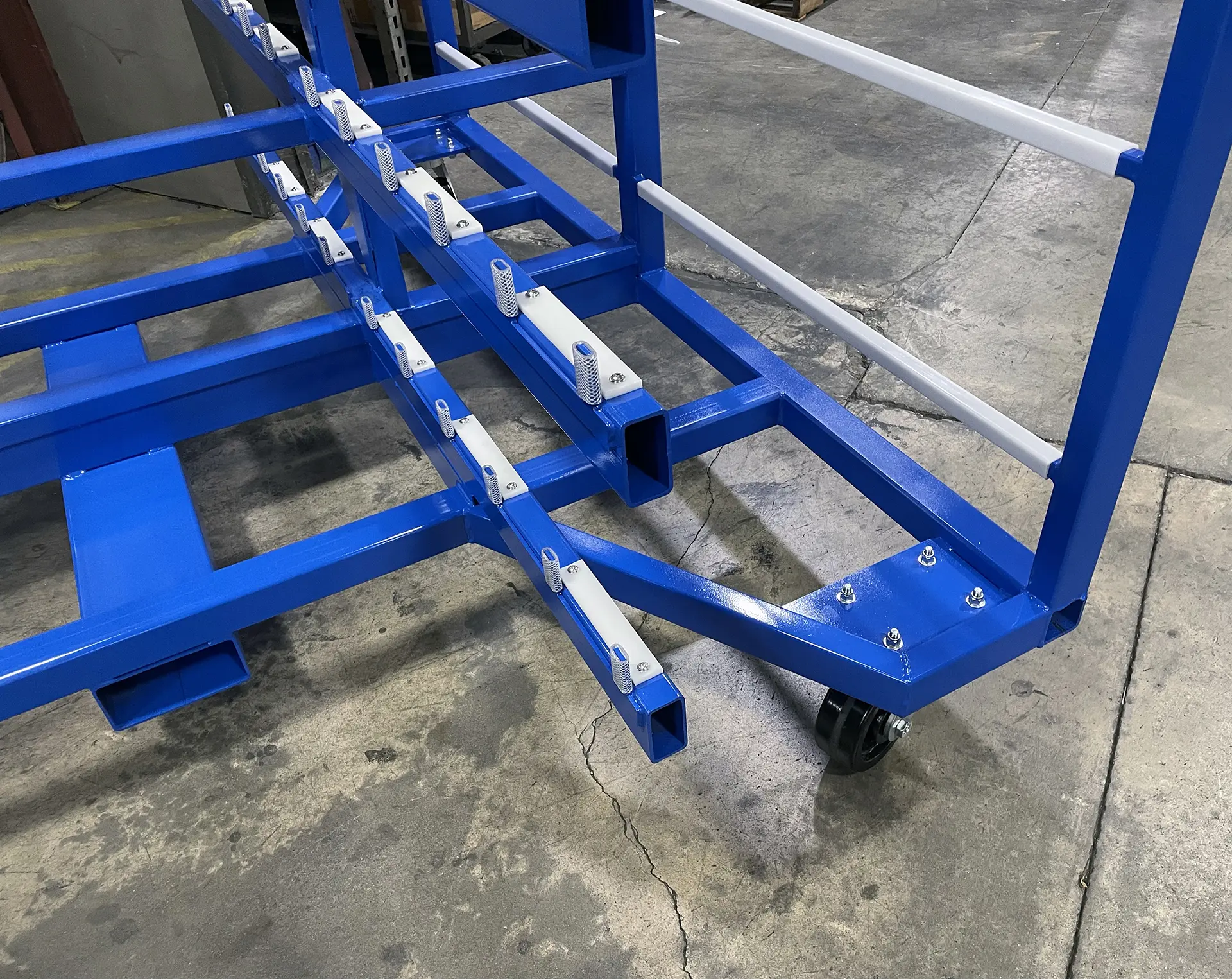
- Bolted HDPE support pads provide a protective interface between the columns and steel support members.
- HDPE bumpers on the side rails help protect components at potential contact points.
- Vertical side bumpers help maintain separation and limit lateral movement within each storage position.
- Dedicated column slots keep assemblies organized instead of allowing them to rest directly against one another.
The revised design includes thicker HDPE pads bolted in place and taller vertical bumpers to help secure the columns during transport. Together, these details address both surface protection and consistent part placement.
Heavy-Duty Steel Construction with Job Site Mobility
Plymouth Industries fabricated the cart from carbon steel with a reinforced base and multiple levels of horizontal supports. The blue painted finish provides a clearly identifiable material handling platform for the contractor’s operation.
The cart incorporates two-way fork guides for forklift handling and four industrial casters for repositioning. Wheel locks allow the wheels to be locked while the cart is staged for loading or unloading.
A cutout in the base provides additional access for loading. This detail, combined with the open frame, helps accommodate the practical steps involved in placing long assemblies into their designated positions.
The result is a custom material handling cart that brings storage, component protection, and movement into one piece of equipment.
Horizontal Column Cart Specifications
| Feature | Project Specification |
|---|---|
| Overall dimensions | Approximately 131 inches long × 100 inches wide × 77.25 inches high |
| Column storage | 24 designated positions |
| Construction | Carbon steel |
| Fully loaded weight | Approximately 8,530 pounds, including the cart |
| Component protection | HDPE support pads, HDPE side rail bumpers, and vertical side bumpers |
| Handling features | Two-way fork guides and four casters with wheel locks |
| Loading access | Base cutout and clearance for electrical boxes |
Built Around the Component and the Workflow
Effective construction material handling equipment must fit both the parts and the process. Column spacing, support locations, loading access, and handling methods all influence whether a cart works well in daily use.
This project illustrates the value of designing those details together. Horizontal storage organizes the columns, protective dunnage cushions contact points, and dedicated clearances accommodate attached components. Forklift access and casters provide handling options as assemblies move between staging and installation areas.
Plymouth Industries applies this same approach to custom carts and racks for manufacturing, prefabrication, and construction applications—starting with the component dimensions, load requirements, and intended material flow.
Request a Custom Job Site Cart
Need a better way to stage and move column assemblies or other prefabricated components? Plymouth Industries can design and manufacture a custom job site cart around your materials, protective requirements, and handling process.
Contact Plymouth Industries to discuss your application and request a quote. Share your drawings, component weights, and loading requirements to get started.