Modern warehouses require storage systems that can adapt to changing production schedules, fluctuating inventory levels, and evolving material-handling workflows. Portable warehouse stack racks have become one of the most effective solutions for companies that need flexible, high-density storage without committing to permanent racking systems.
Unlike fixed pallet racking, portable stack racks can be repositioned with a forklift, stacked vertically, and collapsed when not in use, allowing facilities to quickly reconfigure storage layouts as operational needs change. Manufacturers across industries, from structural metals processing to plastics extrusion, industrial equipment service, and architectural glass production, rely on portable stacking racks to maximize floor space while protecting valuable materials and components.
For companies seeking a more adaptable warehouse storage strategy, portable stack racks provide the durability of steel pallet racks combined with the flexibility of mobile material-handling equipment.
What Are Portable Warehouse Stack Racks?
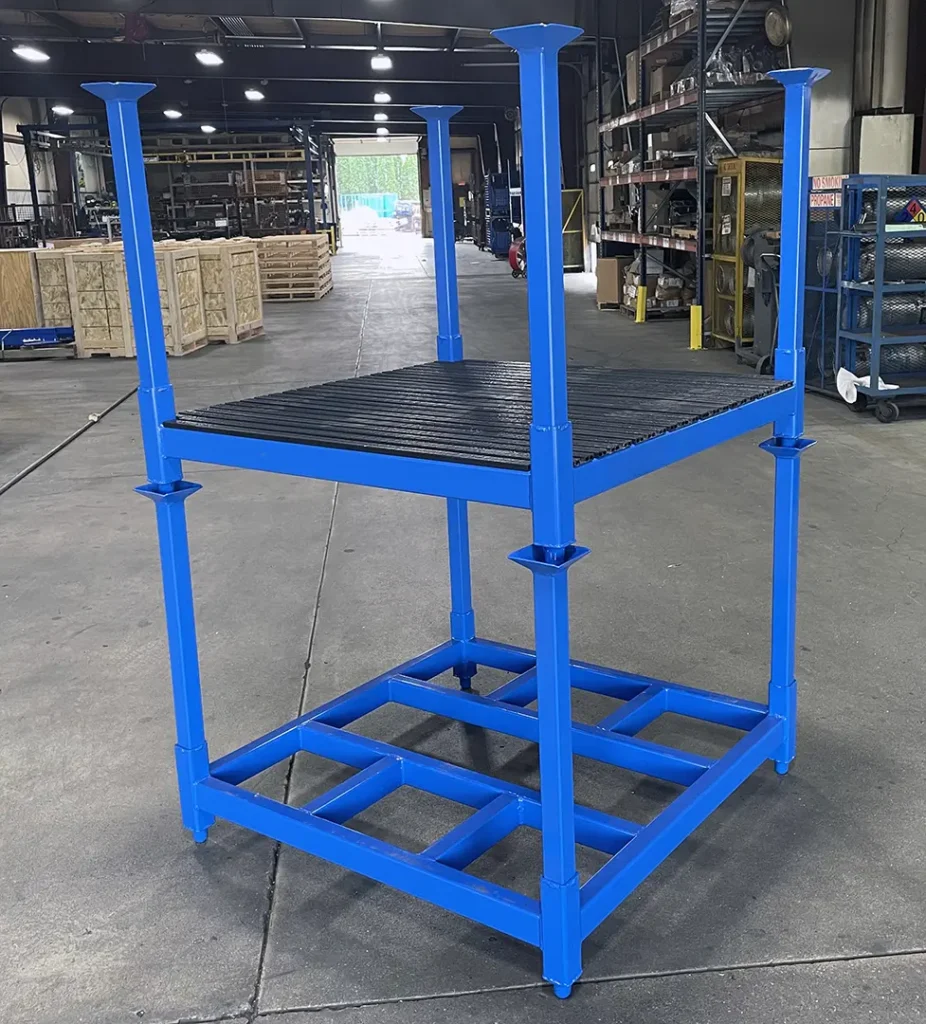
Portable warehouse stack racks, also known as stackable pallet racks, portable stacking racks, or warehouse stack racks, are heavy-duty steel structures designed to store palletized products or bulk materials while enabling vertical stacking.
Each rack typically includes:
- Steel base frame for load stability
- Removable or collapsible posts for vertical stacking
- Forklift entry points for easy relocation
- Stackable design allowing multiple loaded racks to be stacked safely
This configuration enables warehouses to create temporary vertical storage systems without installing permanent racking infrastructure.
Unlike traditional warehouse racking systems that must remain fixed in place, stack racks can be moved as production flow changes, making them ideal for facilities that manage seasonal inventory, project-based production, or variable material storage requirements.
Why Manufacturers Choose Portable Stack Racks
Many manufacturers are transitioning to portable stacking rack systems because they offer advantages that fixed racking simply cannot match.
1. Flexible Storage Layouts
Manufacturing facilities often experience changes in inventory mix, production volume, or product dimensions. Portable warehouse racks allow operators to quickly adjust storage layouts without construction or downtime.
For example, metal producers handling large quantities of structural materials often need to rearrange storage zones based on incoming shipments and production schedules. Stack racks make it possible to expand or reduce storage areas instantly.
2. High-Density Vertical Storage
Portable stack racks allow companies to store materials vertically without installing permanent pallet racking systems.
When loaded racks are stacked several levels high, warehouses can dramatically increase storage capacity while maintaining accessibility. This is particularly valuable in facilities where floor space is limited, but ceiling height is available.
Industries that handle bulky materials, such as extruded plastic profiles, heavy steel components, or large fabricated parts, often rely on stackable racks to maximize storage in cubic feet.
3. Improved Material Protection
Many manufactured products require careful handling to prevent damage during storage. Portable stack racks help protect materials by keeping products elevated, contained, and organized.
For example:
- Industrial plastics manufacturers frequently use stack racks to protect long extrusions and molded components.
- Architectural glass processors require storage systems that prevent scratching, tipping, or impact damage.
- Industrial service providers often store equipment components and replacement parts in stack racks to maintain organization and accessibility.
By providing structured containment and vertical separation, stack racks reduce the risk of product damage while improving inventory control.
4. Forklift Mobility
Portable stack racks are designed to be easily moved with standard forklifts, allowing operators to transport stored materials throughout the facility without repacking or transferring products to pallets.
This mobility allows facilities to:
- Move materials closer to production lines
- Reorganize storage zones as inventory changes
- Improve staging and shipping workflows
The ability to relocate fully loaded racks provides a significant advantage in dynamic manufacturing environments.
Industries That Benefit from Portable Stack Racks
Portable warehouse stack racks are widely used across industries that handle large, heavy, or irregularly shaped materials.
Metals and Steel Processing
Steel producers and metal processing facilities often manage large bundles of structural materials, plate stock, and fabricated components. Stack racks provide a practical solution for storing heavy products while enabling flexible storage configurations.
These racks allow facilities to quickly reorganize storage zones as material shipments arrive or production demands change.
Plastics and Extrusion Manufacturing
Manufacturers producing extruded plastic components require storage systems that protect finished products from distortion or damage.
Stack racks help maintain organized storage for long or delicate profiles, ensuring materials remain secure while allowing operators to easily move them throughout the facility.
Industrial Equipment Service
Companies servicing heavy equipment and industrial systems often maintain large inventories of replacement components, assemblies, and mechanical parts.
Portable stacking racks provide efficient storage for bulky or irregular components, allowing technicians to quickly access and transport materials between service areas.
Architectural Glass Manufacturing
Glass manufacturing and processing facilities require storage solutions that maintain product integrity while maximizing warehouse capacity.
Portable racks can be designed to secure glass panels, frames, or structural components, enabling safe stacking and transport without compromising product quality.
Key Design Features of Industrial Stack Racks
High-performance portable warehouse stack racks are engineered to meet the demanding requirements of industrial environments.
Heavy-Duty Steel Construction
Industrial stack racks are typically fabricated from high-strength structural steel, ensuring the durability required to support heavy loads while maintaining stability when stacked.
Removable or Collapsible Posts
Many portable stacking racks include removable vertical posts that allow the racks to be collapsed when empty. This feature reduces storage space requirements when racks are not in use.
Stackable Load Capacity
Properly engineered stack racks are designed to support multiple stacked levels while fully loaded, allowing facilities to safely maximize vertical storage capacity.
Forklift Accessibility
Integrated forklift pockets or entry points allow operators to lift, transport, and reposition racks quickly, supporting dynamic warehouse operations.
Custom Rack Configurations
Because many products have unique dimensions and handling requirements, stack racks can be custom-designed to accommodate specific load sizes, weight capacities, and storage layouts.
Portable Stack Racks vs. Traditional Pallet Racking
| Feature | Portable Stack Racks | Fixed Pallet Racking |
|---|---|---|
| Mobility | Easily moved with forklifts | Permanent installation |
| Layout Flexibility | Can be reconfigured quickly | Limited adaptability |
| Storage Density | Stack vertically as needed | Fixed rack levels |
| Installation | No facility modifications required | Requires installation and anchors |
| Seasonal Storage | Easily deployed or stored | Permanent infrastructure |
For facilities that experience frequent changes in storage requirements, portable stack racks offer significantly greater operational flexibility.
Supporting Lean Manufacturing and Warehouse Efficiency
Portable warehouse stack racks align well with lean manufacturing and warehouse optimization strategies.
Because racks can be moved, stacked, and reconfigured quickly, facilities can create temporary staging areas, production buffers, and shipping zones as needed. This allows companies to adapt warehouse layouts to match real-time production needs.
Additionally, stack racks help reduce wasted space by enabling vertical storage without permanent infrastructure investments.
Choosing the Right Portable Stack Rack System
Selecting the right stack rack design requires evaluating several key factors:
- Load weight and product dimensions
- Stacking height requirements
- Forklift compatibility
- Warehouse layout and aisle width
- Material protection requirements
Custom-engineered rack systems ensure that materials are stored safely while maximizing storage efficiency.
Companies with unique product shapes or heavy loads often benefit from custom stack rack designs tailored to their specific handling and storage workflows.
Flexible Storage Solutions from Plymouth Industries
Portable warehouse stack racks provide a practical solution for manufacturers seeking flexible, high-density storage that adapts to changing operational needs. By combining durability, mobility, and stackable design, these systems allow warehouses to maximize storage capacity while maintaining efficient material flow.
Plymouth Industries designs and fabricates heavy-duty portable stack racks and custom material handling solutions for demanding industrial environments. Each system is engineered to match the customer’s specific products, load requirements, and facility layout.
If your operation needs a more flexible warehouse storage system, contact Plymouth Industries to discuss a custom portable stack rack solution designed for your materials, workflow, and production environment.