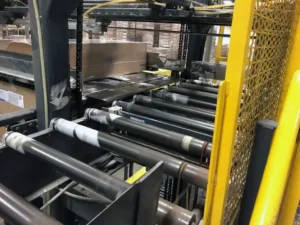
Plymouth Industries designs and builds custom integrated conveyor systems and turnkey manufactured solutions that solve complex material-flow challenges in demanding manufacturing environments. From precision metal tubing to foam sheet handling and high-volume consumer packaging, these engineered conveyor solutions are built to increase throughput, reduce manual handling, and integrate seamlessly with existing production equipment.
Engineered Conveyor Systems Built Around Your Process
No two production lines operate the same way. Plymouth Industries approaches industrial conveyor system design by starting with the customer’s process requirements, floor layout, product characteristics, and downstream equipment. The result is a fully integrated conveyor solution tailored to the application, not a modified off-the-shelf system.
Recent projects include integrated conveyor systems developed for:
- Precision tube processing and polishing operations require controlled accumulation, metering, and transfer between machines
- Foam and sheet material manufacturing, where accurate positioning, jam detection, and smooth product flow are critical
- High-volume consumer product packaging, where consistent core and component delivery supports continuous, multi-line operations
Each system is designed to support uptime, safety, and long-term reliability in high-demand industrial environments.
Download Conveyor Systems PDF
Key Features of Plymouth Industries Conveyor Solutions
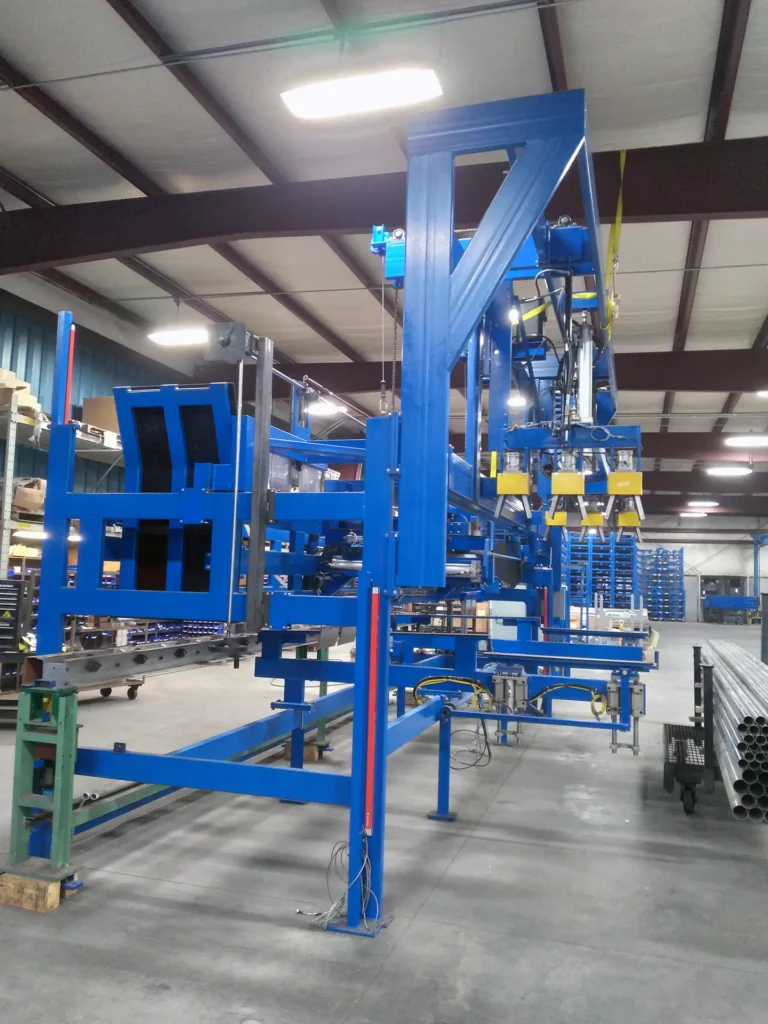
Plymouth Industries’ custom conveyor systems are engineered as complete, turnkey solutions. Common system elements include:
- Integrated accumulation conveyors to manage flow between upstream and downstream equipment
- Pneumatic pop-ups, indexing stops, and gates for precise product positioning and controlled release
- Photo eyes and sensors for jam detection, product presence, and system feedback
- PLC-controlled automation with HMI interfaces for operator control and diagnostics
- Heavy-duty structural steel construction designed for 24/7 industrial use
- Safety-focused designs, including guarding, emergency stops, safety mats, and OSHA-compliant controls
These systems are built to handle varying product sizes, weights, and orientations while minimizing changeover time and operator intervention.
Seamless Integration with Existing Equipment
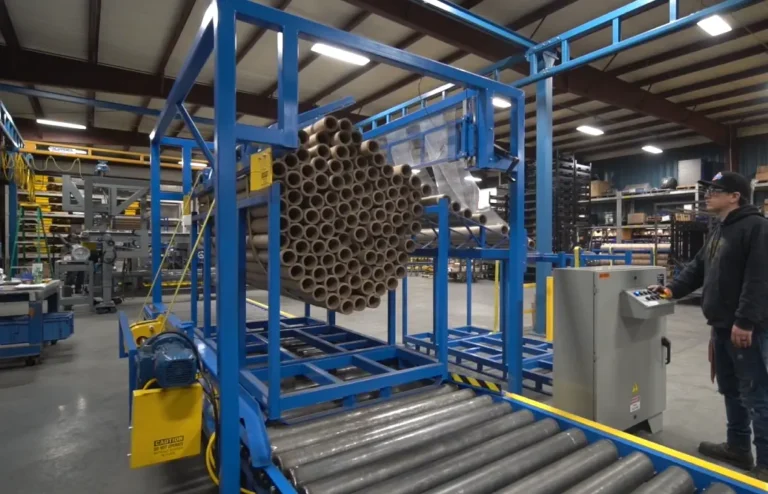
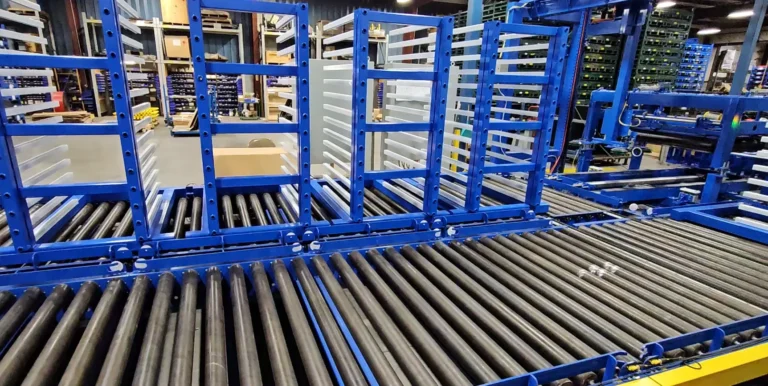
A critical advantage of working with Plymouth Industries is the ability to integrate conveyor systems directly into existing production lines. Whether feeding polishers, sanders, labelers, spoolers, or packaging equipment, each conveyor is engineered to communicate with upstream and downstream machines.
This integrated approach helps manufacturers:
- Reduce bottlenecks and unplanned downtime
- Improve product handling consistency
- Eliminate manual transfers and rework
- Maintain safe access for operators and maintenance personnel
Layouts are carefully engineered to preserve aisle access, maintenance clearance, and future scalability.
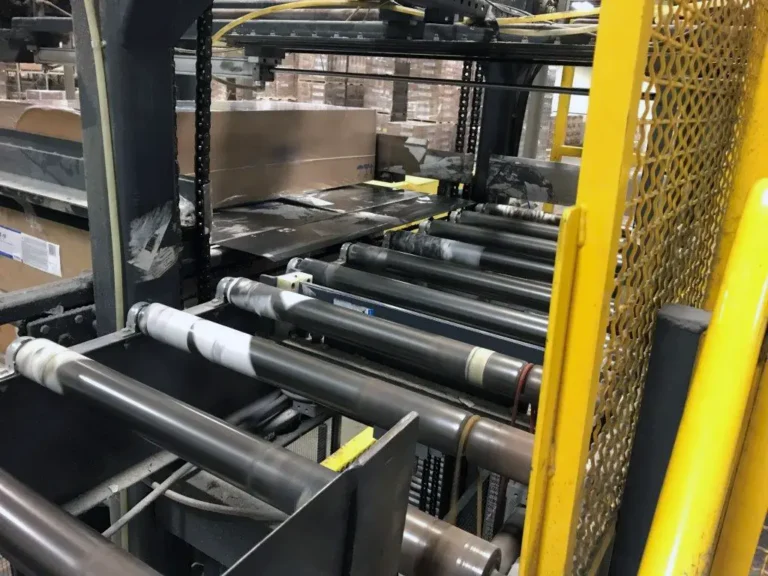
Types of Conveyor Systems Used in High-Throughput Manufacturing
Selecting the right custom-integrated conveyor system starts with understanding the available conveyor technologies. Each conveyor type is engineered for specific product characteristics, throughput requirements, and automation goals. Below is an overview of the most common industrial conveyor systems used in high-volume manufacturing environments.
Belt Conveyors
Belt conveyor systems are among the most widely used solutions for transporting cartons, packages, lightweight components, and bulk materials.
Common configurations include:
- Flat belt conveyors
- Incline and decline belt conveyors
- Cleated belt conveyors
- Food-grade belt conveyors
Belt conveyors are ideal for packaging lines, consumer product manufacturing, and general material-handling applications where smooth, continuous movement is required.
Roller Conveyors
Roller conveyor systems are commonly used for pallet handling, totes, and rigid cartons.
Types include:
- Gravity roller conveyors
- Powered roller conveyors
- Chain-driven live roller (CDLR) conveyors
- Motorized roller (MDR) conveyors
- Zero-pressure accumulation conveyors
Roller conveyors are often integrated into automated conveyor systems where controlled accumulation and precise product spacing are critical.
Chain Conveyors
Chain conveyor systems are designed for heavy-duty applications and large loads.
Common types:
- Multi-strand chain conveyors
- Drag chain conveyors
- Slat chain conveyors
These systems are frequently used in automotive, heavy equipment, and industrial manufacturing environments where durability and load capacity are essential.
Slat Conveyors
Slat conveyors use steel or engineered plastic slats to move products that may be too hot, heavy, or abrasive for traditional belt conveyors. They are commonly used in industrial assembly and machining operations.
Screw Conveyors
Screw conveyors (auger conveyors) are used for moving bulk materials such as powders, granules, and aggregates.
Configurations include:
- Horizontal screw conveyors
- Inclined screw conveyors
- Vertical screw conveyors
These systems are common in food processing, chemical manufacturing, and bulk material handling operations.
Pneumatic Conveyors
Pneumatic conveyor systems move lightweight materials through enclosed pipelines using air pressure or vacuum.
- Dilute phase systems
- Dense phase systems
They are ideal for dust-controlled environments and high-speed bulk material transport.
Overhead Conveyors
Overhead conveyor systems maximize floor space by suspending the conveyor from above.
Types include:
- Enclosed track conveyors
- I-beam conveyors
- Power and free conveyors
These systems are commonly used in finishing lines, paint systems, and assembly operations.
Accumulation & Transfer Conveyors
In high-throughput environments, accumulation conveyors and transfer systems play a critical role in managing product flow between machines.
Examples include:
- Zero-pressure accumulation conveyors
- Pop-up transfer conveyors
- Indexing stop conveyors
- Diverter conveyors
- Turntables and rotary transfer systems
These solutions allow manufacturers to buffer product, prevent bottlenecks, and integrate seamlessly with upstream and downstream equipment.
Designed, Fabricated, and Tested in Wisconsin
All custom industrial conveyor systems are designed, fabricated, and assembled by Plymouth Industries in Wisconsin. Systems are power-tested and reviewed prior to shipment to ensure performance expectations are met before installation.
Engineering support continues beyond fabrication, with optional installation assistance, startup support, and system tuning available to help customers achieve optimal performance from day one.
Why Manufacturers Choose Plymouth Industries
Manufacturers across multiple industries rely on Plymouth Industries for conveyor automation and turnkey engineered solutions because of their:
- Deep experience in custom material handling and conveyor engineering
- Ability to manage complex, multi-stage conveying systems
- Focus on durability, safety, and maintainability
- Collaborative design process that aligns with real-world production needs
These strengths make Plymouth Industries a trusted partner for both standalone conveyor projects and fully integrated automation systems.
Ready to Optimize Your Material Flow?
If your operation requires a custom integrated conveyor system designed around your process, not forced into a standard solution, Plymouth Industries can help. Contact the Plymouth Industries team to discuss your application and explore how a purpose-built conveyor system can improve efficiency, safety, and throughput across your production line.